
Most of us believe we’re eating “healthy” just because our plate has dal, rice, and sabzi. But the truth is — a typical Indian meal often falls short of nutrition. Why?
- Commercial farming and long storage times strip food of its natural nutrients.
- Modern cooking methods, like deep frying and over-boiling, destroy vitamins and minerals.
- Most meals lack balance — they are heavy on carbs but low on protein and healthy fats.
So even if you think you’re eating right, your body may still be running on nutrient deficiencies.
That’s why we need to go back to the basics — and understand the 3 pillars of a healthy Indian meal.
Pillar 1: Protein
Protein is the building block of your muscles, tissues, and metabolism. Sadly, Indian diets are usually protein-deficient.
Why it matters:
- Boosts metabolism and supports fat loss
- Preserves muscle mass
- Keeps you fuller for longer
Good Indian sources:
- Paneer, curd, milk
- Pulses, lentils, chickpeas, rajma
- Soybeans, tofu, sprouts
- Nuts and seeds
Pillar 2: Healthy Carbohydrates
Carbs are often seen as the villain, but the truth is — your body needs them for energy. The problem is when you eat refined carbs (like maida, white bread, fried snacks).
Why it matters:
- Provide energy for daily activities and exercise
- Support brain function
- Deliver fiber that improves digestion
Good Indian sources:
- Brown rice, millets (ragi, bajra, jowar)
- Whole wheat chapati
- Oats, quinoa
- Seasonal fruits and vegetables
Pillar 3: Healthy Fats
Fat doesn’t make you fat — bad fats do. Healthy fats actually help you absorb vitamins, protect your organs, and keep your hormones balanced.
Why it matters:
- Supports brain and heart health
- Reduces inflammation
- Keeps you energetic throughout the day
Good Indian sources:
- Nuts: almonds, walnuts, cashews
- Seeds: flaxseeds, chia, sunflower seeds
- Oils: mustard oil, coconut oil (cold-pressed)
- Avocado (if available)
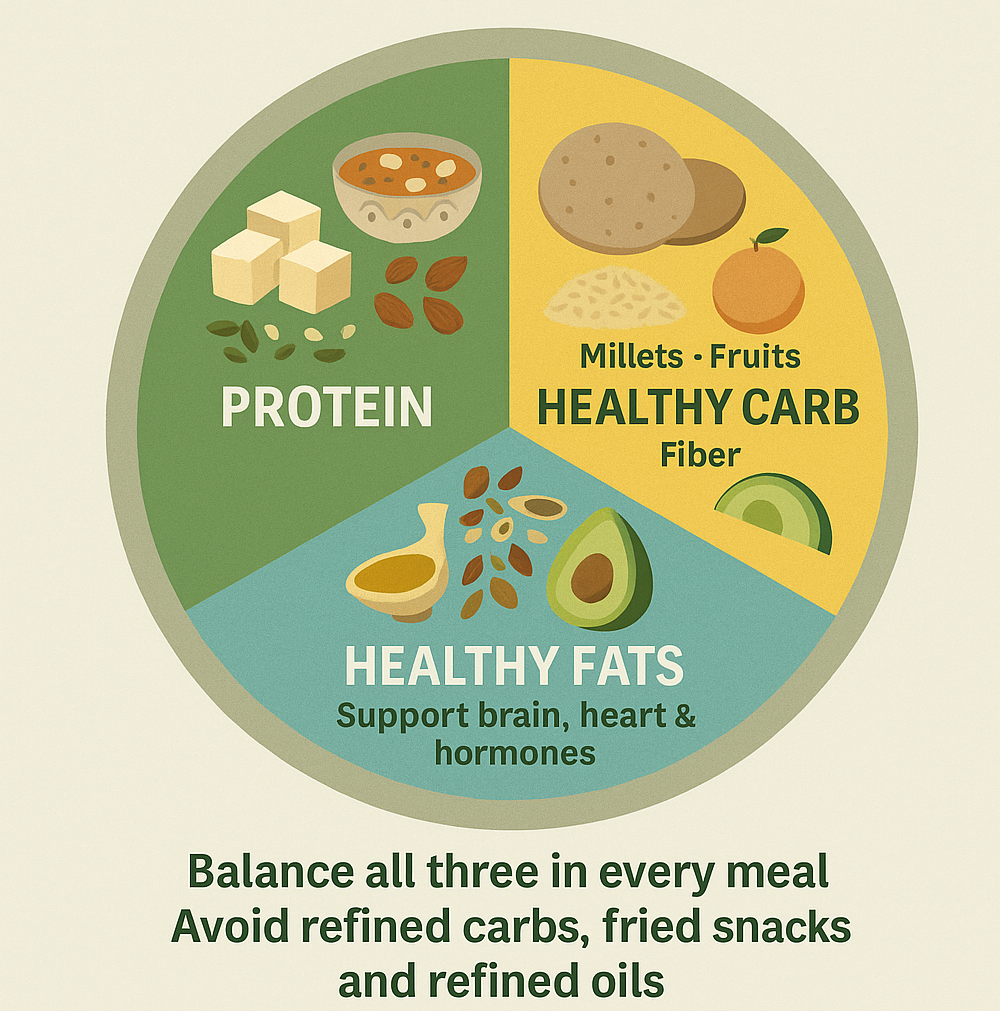
Why Most Indian Meals Fail
- Heavy on carbs (rice + roti in one meal)
- Too little protein (dal alone is not enough)
- Cooked in unhealthy oils (refined sunflower/soybean oil)
- Overcooked vegetables with little nutrition left
This imbalance causes fatigue, bloating, weight gain, and eventually lifestyle diseases like diabetes, high cholesterol, and thyroid issues.
The Right Way Forward
Building a healthy plate isn’t about adding fancy foods — it’s about creating the right balance of these 3 pillars. But here’s the catch: every person’s needs are different.
- Your age, weight, lifestyle, and health conditions decide how much protein, carbs, and fats you need.
- What works for your friend or a YouTube diet plan may not work for you.
That’s why personalized nutrition coaching is key.
Take Action Today
At Delhi Health Club, we combine your daily food habits with smart nutrition planning. We don’t give you shortcuts — we give you a sustainable plan tailored for your body.
📍 Get your Body Composition Report and a personalized diet plan today.
📞 Call or WhatsApp us at 8800914132 to book your free consultation.
👉 Remember: It’s not about eating less. It’s about eating right.