
Most people begin their weight loss journey by stepping on a weighing scale. They celebrate when the number drops, and they panic when it goes up. But here’s the truth: your weight alone is one of the weakest indicators of real progress.
Why? Because the weighing scale only tells you your total weight — it doesn’t tell you what you’ve lost or gained. Did you lose fat? Or was it muscle and water? Without this clarity, you may feel like you’re “losing weight” while your health is actually going downhill.
This is where body composition analysis comes in. It’s a scientific way to understand your body beyond just kilos — and it’s the smartest tool you can use if you want to lose fat effectively and sustainably.
Weight vs Fat vs Muscle: Why the Scale Misleads You
Your body weight is made up of:
- Fat Mass (subcutaneous fat under the skin and visceral fat around your organs)
- Muscle Mass (skeletal muscles that keep you strong and active)
- Water Weight
- Bone Mass
When you follow crash diets, “jugaad” hacks from YouTube, or extreme exercise, the first thing you lose is water and muscle — not fat. The weighing scale may show a quick drop, but what you’ve actually done is slow down your metabolism and made fat loss harder in the long run.
That’s why people say: “I lost weight, but I gained it all back!”
With body composition analysis, you know exactly what’s happening inside your body. You stop obsessing over the number on the scale and start focusing on what truly matters: losing fat while protecting muscle.
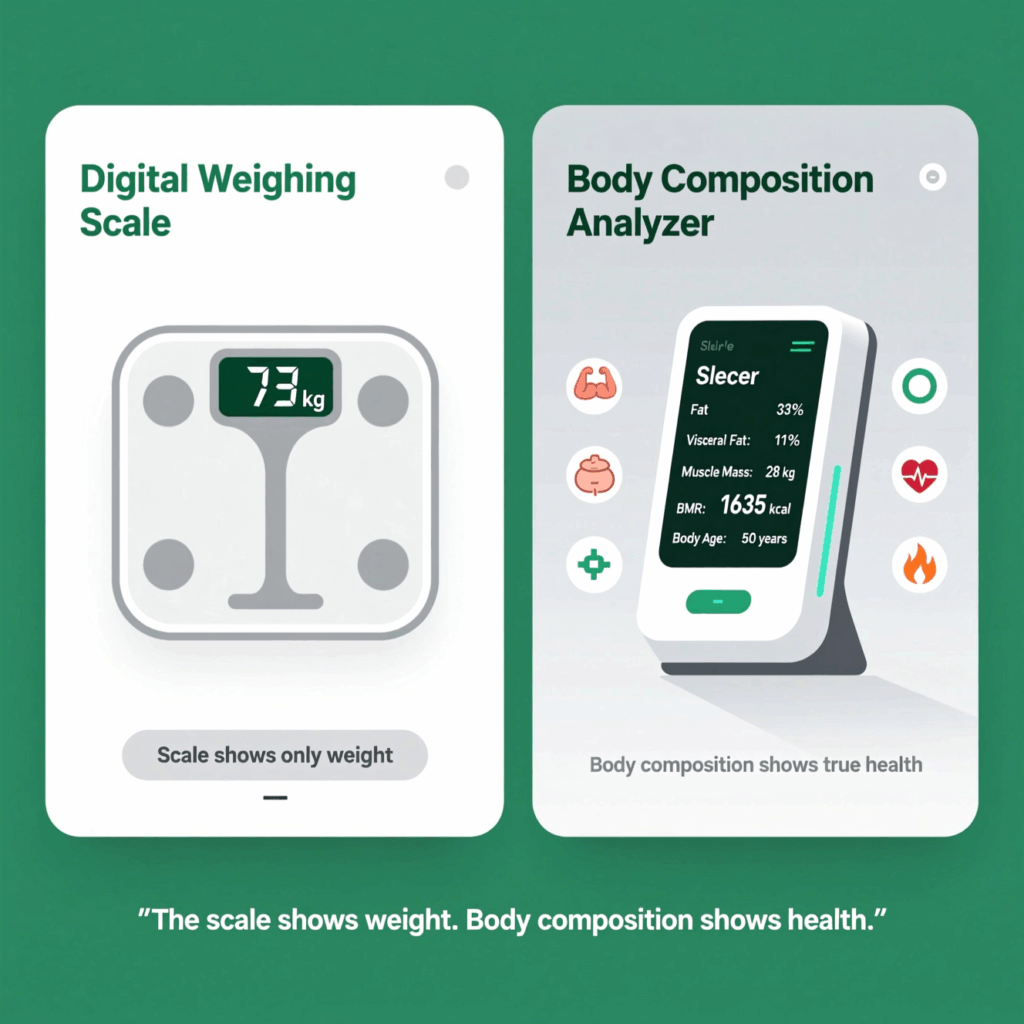
What Is Body Composition Analysis?
Body composition analysis is a method that breaks down your body into different components. At Delhi Health Club, our advanced analysis gives you data on:
- Body Fat % → How much of your body is fat.
- Visceral Fat % → Fat stored around internal organs (the dangerous kind linked to diabetes, cholesterol, and heart disease).
- Muscle Mass → How much skeletal muscle your body has.
- BMR (Basal Metabolic Rate) → How many calories your body burns at rest.
- Body Age → How old your body is functioning compared to your actual age.
This isn’t guesswork — it’s real science that tells you what the weighing scale can’t.
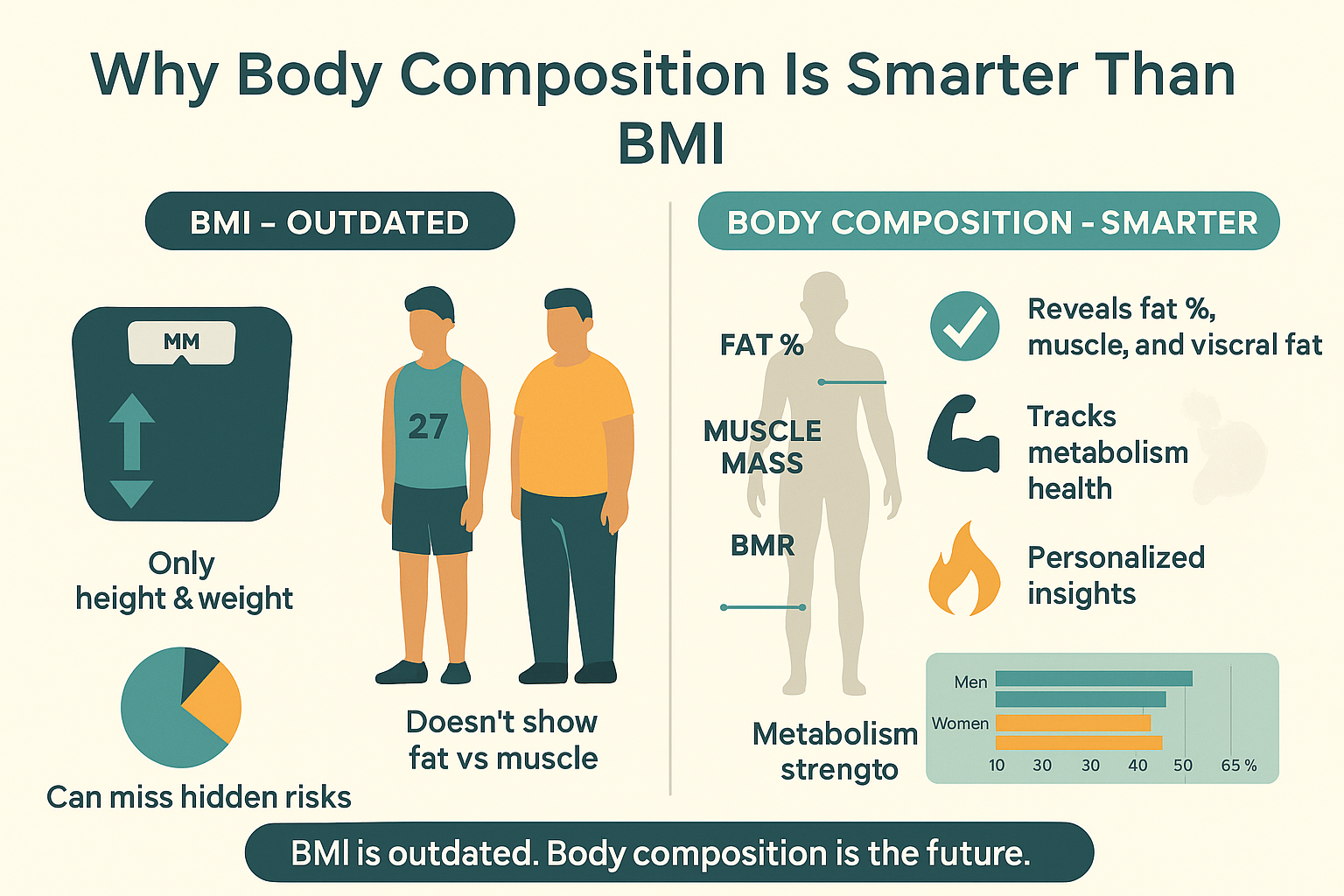
Why Body Composition Is Smarter Than BMI
Many people use BMI (Body Mass Index) to track health. But BMI only compares your height and weight — it doesn’t distinguish between fat and muscle.
For example:
- A fit athlete and an overweight person can have the same BMI.
- Someone may appear “healthy” by BMI but carry dangerous levels of visceral fat.
Body composition goes far deeper. It shows you:
- Whether your body fat % is healthy for your age and gender.
- If you’re losing muscle instead of fat (a major red flag).
- How strong your metabolism is (through BMR).
In short: BMI is outdated. Body composition is the future.
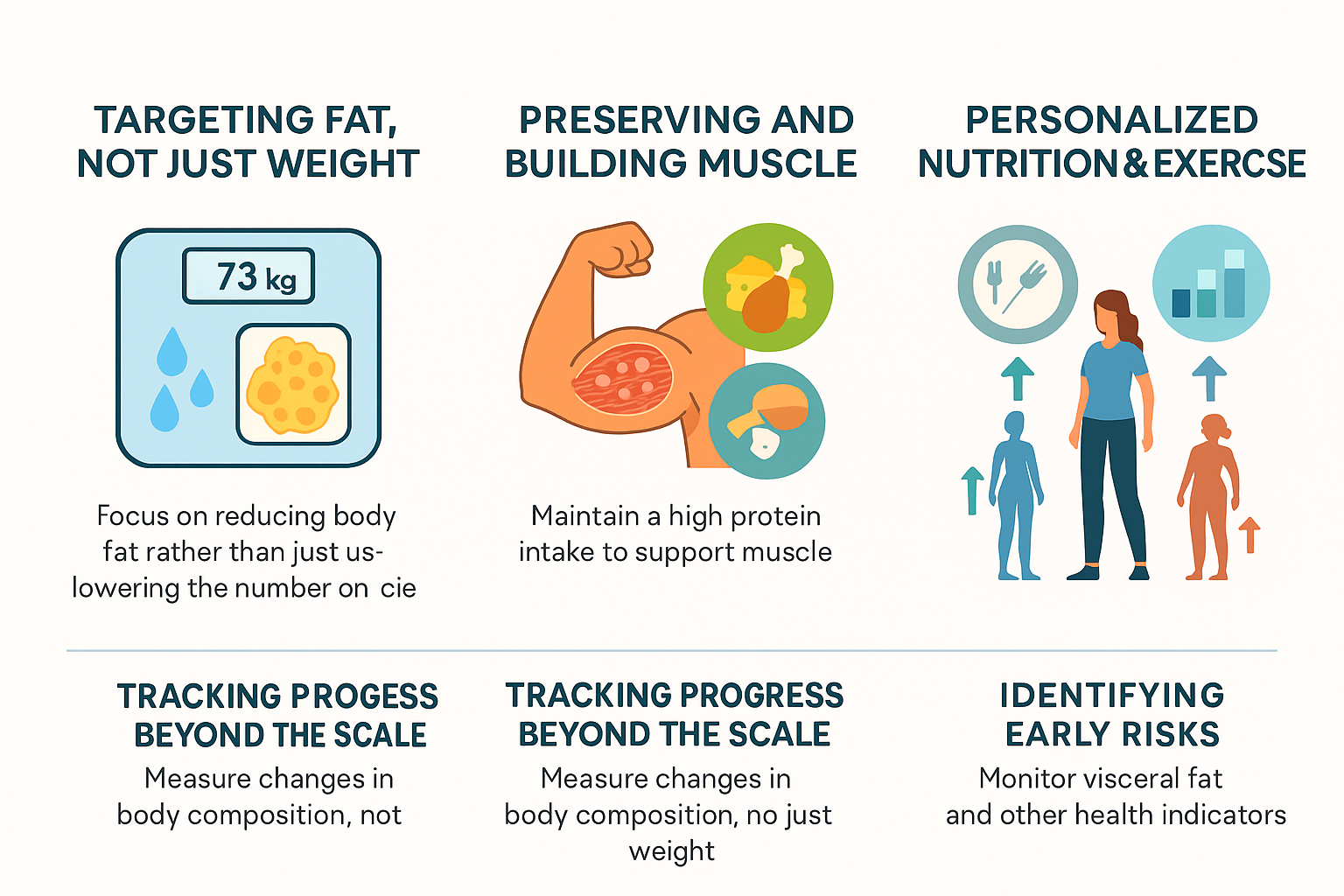
How Body Composition Helps You Lose Fat Smarter
- Targeting Fat, Not Just Weight
With fat % and visceral fat data, you know whether your plan is truly reducing harmful fat or just water weight. - Preserving and Building Muscle
By monitoring muscle mass, you can adjust your protein intake and exercise routine to protect lean muscle — which keeps metabolism high. - Personalized Nutrition and Exercise
Instead of following generic diets, body composition data helps nutritionists create plans that match your body’s exact needs. - Tracking Progress Beyond the Scale
Even if your weight doesn’t drop, fat % may go down and muscle may increase — a much healthier result. This prevents the frustration of “no progress.” - Identifying Early Risks
High visceral fat levels often appear years before diseases like diabetes or hypertension show symptoms. Body composition helps you act before it’s too late.
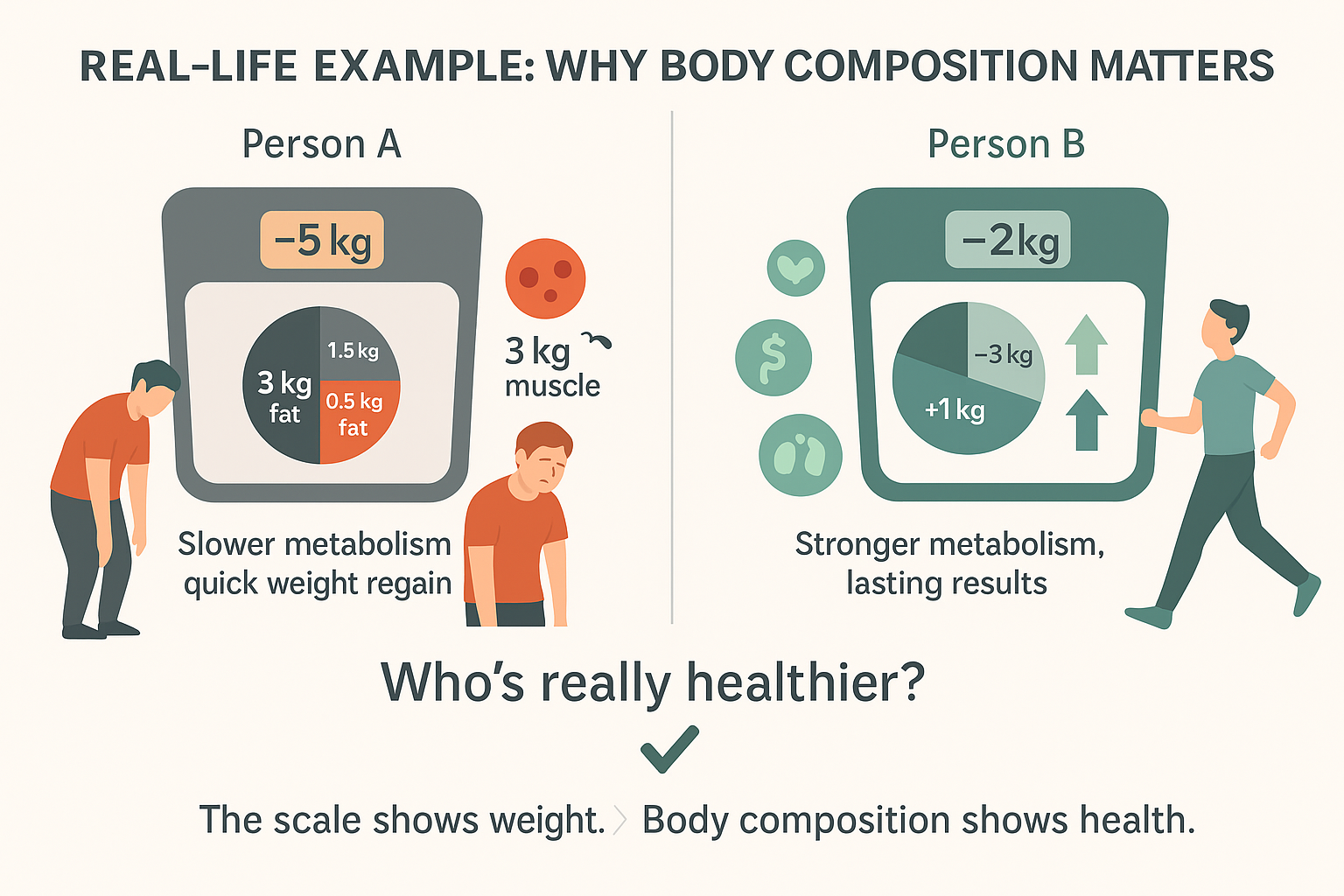
Real-Life Example
Imagine two people:
- Person A: Follows a crash diet, loses 5 kg in a month. But analysis shows they lost 3 kg muscle, 1.5 kg water, and only 0.5 kg fat. Their metabolism is now slower, and they’ll likely gain it all back quickly.
- Person B: Follows a balanced plan based on body composition. They lose 3 kg fat and gain 1 kg muscle in a month. The scale shows only 2 kg difference, but their clothes fit better, energy is higher, and metabolism is stronger.
Who’s really healthier? Clearly, Person B.
Actionable Strategies You Can Use
- Check Body Composition Regularly: Every 4–6 weeks is ideal.
- Prioritize Protein: Protein preserves muscle during fat loss. Paneer, pulses, sprouts, and curd are great vegetarian sources.
- Strength Training: Add resistance workouts twice a week. Losing fat while building muscle is the smartest combo.
- Watch Visceral Fat: Reduce refined carbs, fried foods, and alcohol to lower belly fat.
- Don’t Fear the Scale: Use it alongside body composition, not as your only measure.
The Bigger Picture
The goal isn’t to become “lighter.” The goal is to become leaner, stronger, and healthier. Body composition analysis gives you the roadmap to get there — while protecting your long-term health.
Instead of chasing temporary fixes, it helps you focus on sustainable progress.
Call to Action
At Delhi Health Club, we use advanced body composition analysis to guide every plan. We don’t just give you diets — we give you clarity. You’ll know your fat %, visceral fat, muscle mass, and BMR, and we’ll build a personalized plan around it.
👉 Stop guessing. Start knowing.
📞 Call or WhatsApp us at 8800914132 today and book your Free Consultation.