
From crunchy chips and namkeen to biscuits and instant noodles, processed Indian snacks have become a part of our everyday life. They’re quick, tasty, and affordable — but behind that convenience hides a serious health risk.
Let’s uncover what really goes into these snacks, how they affect your body, and what you can do to make healthier choices without giving up on taste.
⚠️ What Are Processed Snacks?
Processed snacks are foods that go through multiple stages of manufacturing — including refining, chemical treatment, flavoring, and preservation — to increase shelf life and enhance taste.
Common examples include:
- Chips and namkeen
- Cream biscuits and cookies
- Instant noodles
- Packaged juices and soft drinks
- Ready-to-eat snacks and frozen items
While they may satisfy cravings, they often do so at the cost of your long-term health.
🧪 What Makes Processed Snacks Dangerous?
1. High in Unhealthy Fats
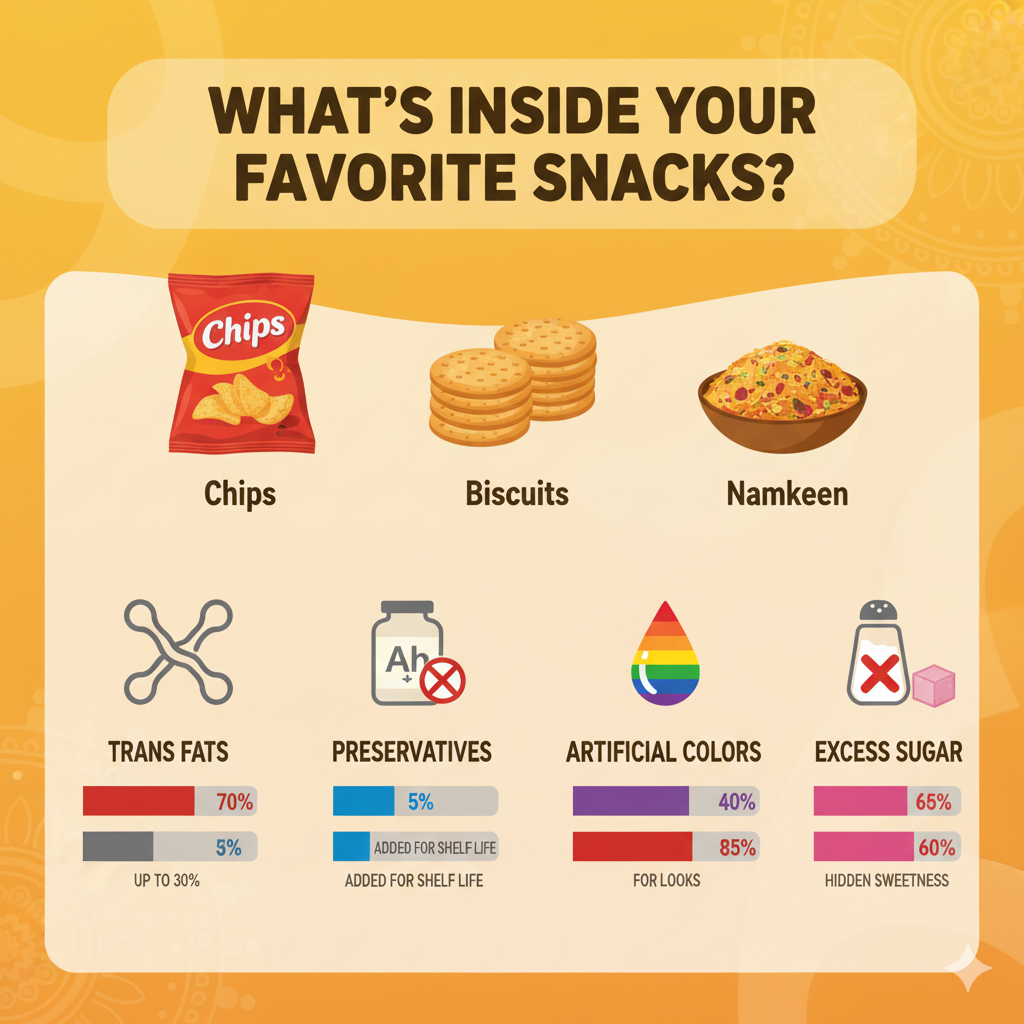
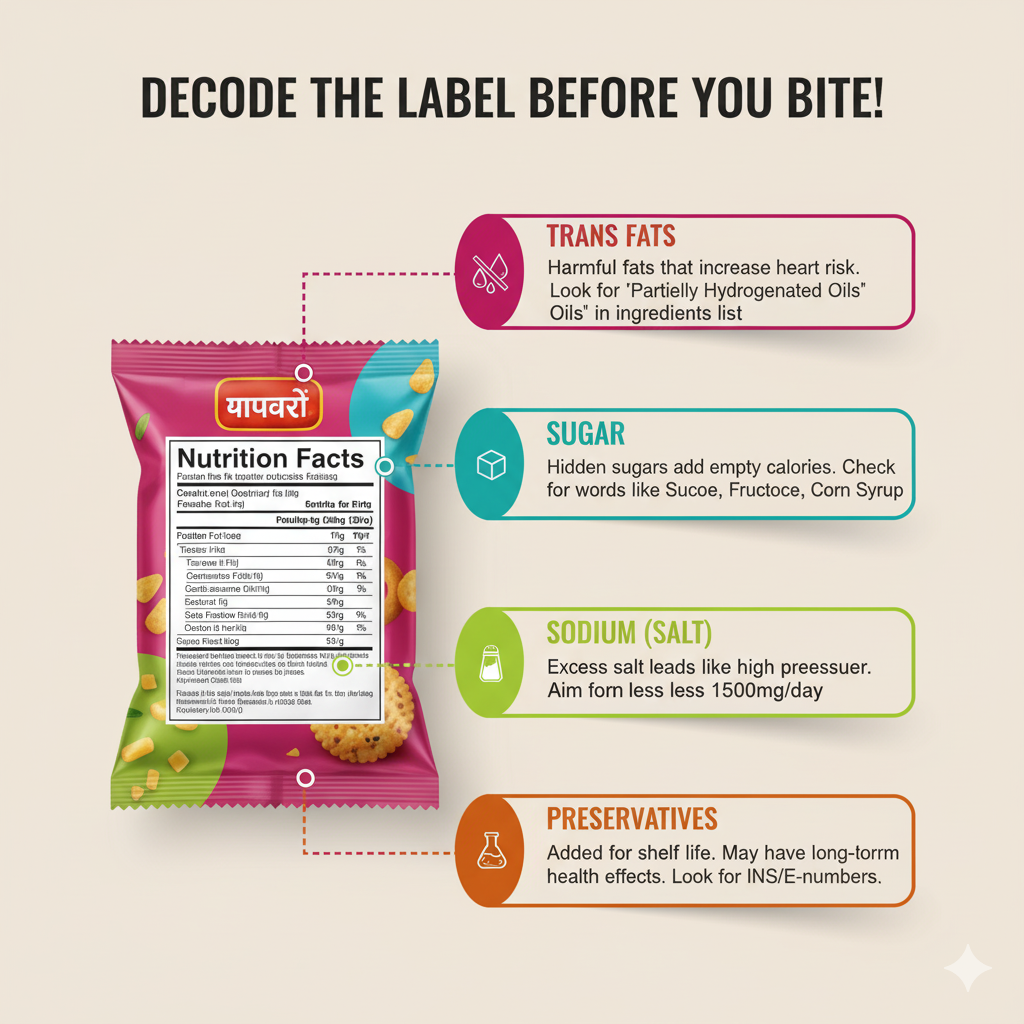
Most processed snacks are fried in refined or hydrogenated oils, which contain trans fats — known to increase bad cholesterol (LDL) and lower good cholesterol (HDL). This raises the risk of heart disease, obesity, and inflammation.
2. Loaded with Refined Carbs & Sugar
Cookies, cakes, and packaged sweets often have high amounts of refined flour (maida) and added sugars, causing rapid blood sugar spikes followed by crashes. Over time, this can lead to insulin resistance and type 2 diabetes.
3. Excess Salt (Sodium Overload)
Popular namkeen and chips contain large amounts of salt and sodium-based preservatives, leading to high blood pressure and water retention, especially harmful for people with heart or kidney issues.
4. Chemical Preservatives & Artificial Colors
These ingredients make snacks look fresh and flavorful but can irritate the digestive system, affect liver function, and disrupt hormones. Some artificial dyes and flavor enhancers are linked to hyperactivity and allergies in children.
5. Empty Calories, No Nutrition
Processed snacks are often calorie-dense but nutrient-poor, providing little to no vitamins, minerals, or fiber. This makes you feel full temporarily but leads to nutrient deficiencies in the long run.
🍎 Healthy Indian Alternatives to Processed Snacks
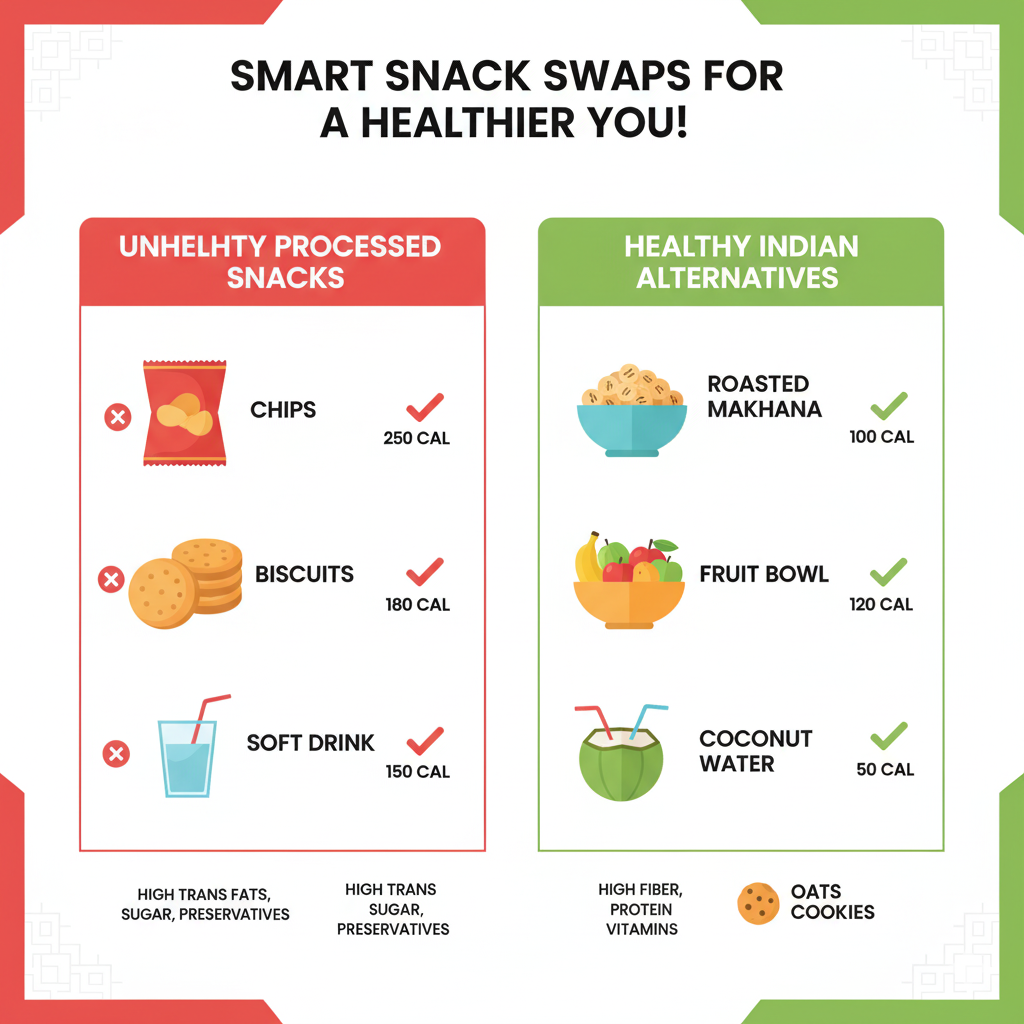
Instead of cutting out snacks completely, swap them with healthier homemade or natural options. Here are some ideas:
| Unhealthy Snack | Healthy Alternative | Benefit |
|---|---|---|
| Chips / Namkeen | Roasted chana, makhana, or peanuts | High in protein & fiber |
| Cream biscuits | Jaggery + dry fruits or oats cookies | Natural sweetness & nutrition |
| Instant noodles | Vegetable poha / upma | Rich in fiber & minerals |
| Packaged sweets | Fruits or dates | Natural sugar & vitamins |
| Soft drinks | Coconut water / lemon water | Hydrating & refreshing |
These alternatives not only taste great but also support your metabolism, energy, and overall well-being.
🏃♀️ How to Reduce Processed Snack Consumption
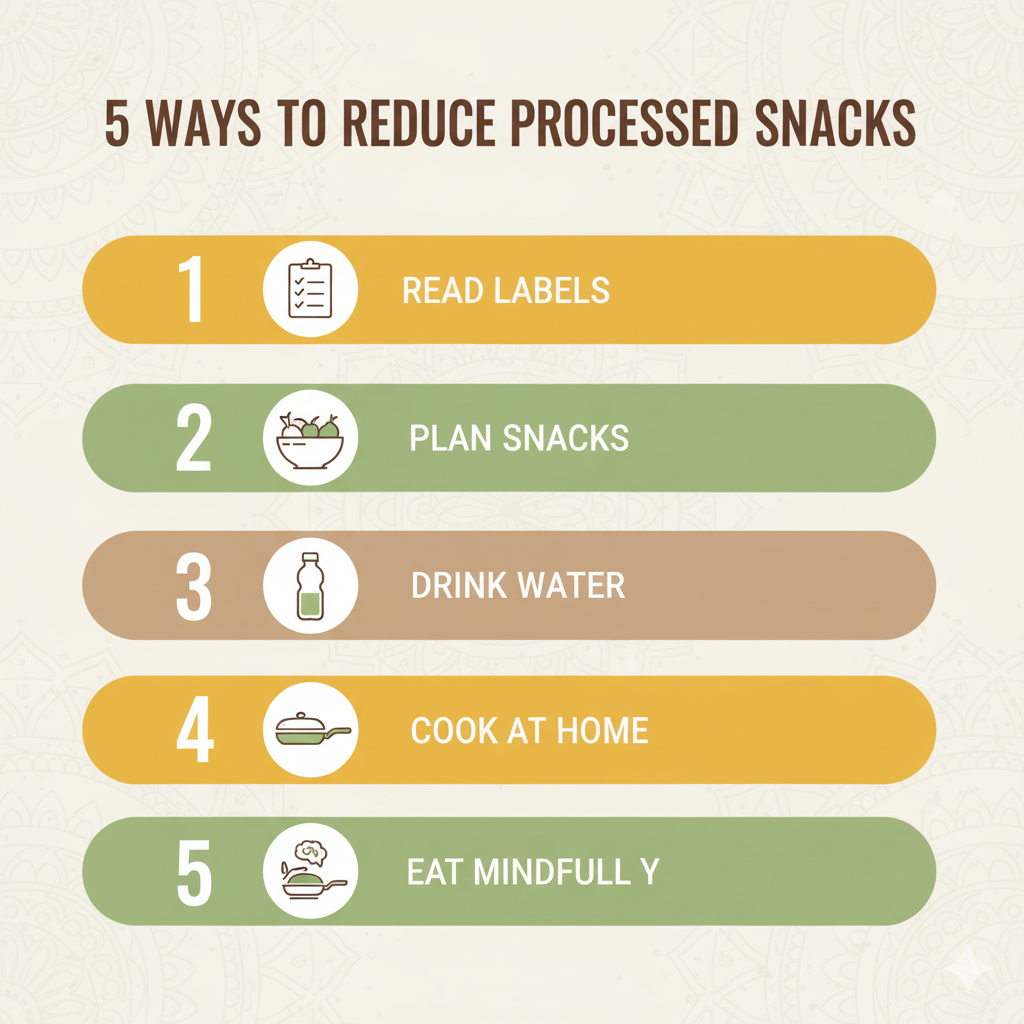
- Read Labels Carefully: Avoid items with trans fats, refined flour, or high sugar.
- Plan Healthy Snacks: Keep nuts, fruits, or yogurt handy for hunger pangs.
- Cook More at Home: Homemade snacks are fresher and cleaner.
- Stay Hydrated: Many times, we snack because of dehydration, not hunger.
- Practice Mindful Eating: Eat slowly and avoid snacking while watching TV.
❤️ Final Thoughts
Processed snacks might be convenient, but their long-term health effects are far from harmless. By understanding what’s really inside these packets and choosing fresh, wholesome Indian alternatives, you can protect your health without giving up flavor.
👉 Want to build a personalized eating plan that fits your lifestyle and helps you avoid harmful snacks?
Consult us today and get your customized nutrition & wellness plan.